

Our Science
Obexelimab
Obexelimab, an investigational drug, is a bifunctional monoclonal antibody engineered to mimic the natural antigen-antibody complex for the inhibition of B cells. By targeting CD19 and FcγRIIb, obexelimab is designed to inhibit a broad B cell population, including plasmablasts and a subpopulation of CD19 expressing plasma cells, each of which produces high amounts of autoantibodies which contribute to autoimmune disease pathogenesis. Co-engagement of CD19 and FcγRIIb by obexelimab has been shown to inhibit B cell activity, including antibody production, proliferation, cytokine secretion, B cell differentiation and antigen presentation to T cells.
-
Rapid recovery of B cells upon withdrawal of therapy
Preclinical and clinical data show that the return of B cells in circulation of patients receiving obexelimab was observed as soon as six weeks after discontinuation, compared with B cell recovery periods of six months or longer observed with anti-CD19 and anti-CD20 targeted depleting therapies.
-
Enhanced disease management
Obexelimab’s self-administered, subcutaneous injection regimen could help patients to manage their own disease.
-
Continuous versus intermittent B cell inhibition
Most B cell depleting agents are administered every six months by intravenous injection. Modest B cell recovery between doses can result in loss of efficacy. We believe obexelimab’s self-administered, subcutaneous injection regimen may ensure continuous suppression of B cell activity.
Obexelimab’s MOA
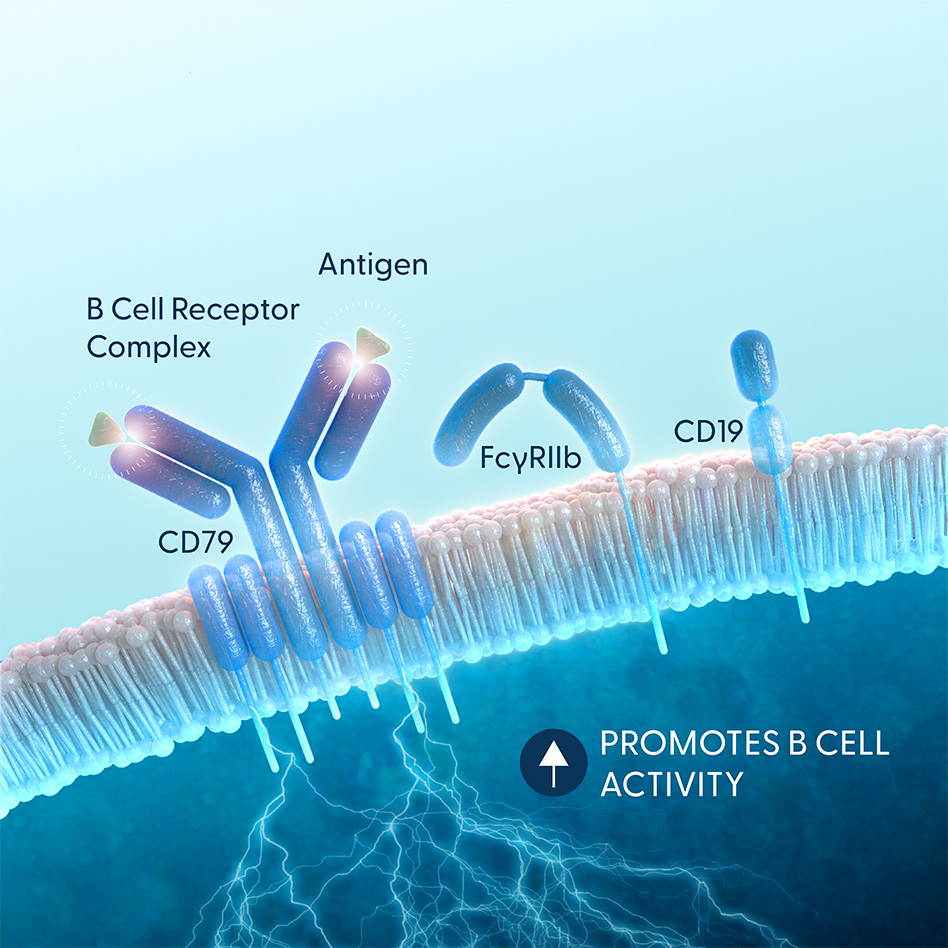
NATURAL ACTIVATION
Ag-B Cell Receptor ComplexPromotes B Cell Activity
- Antibody Production
- Proliferation
- Cytokine Secretion
- Differentiation
- Antigen Presentation to T Cells
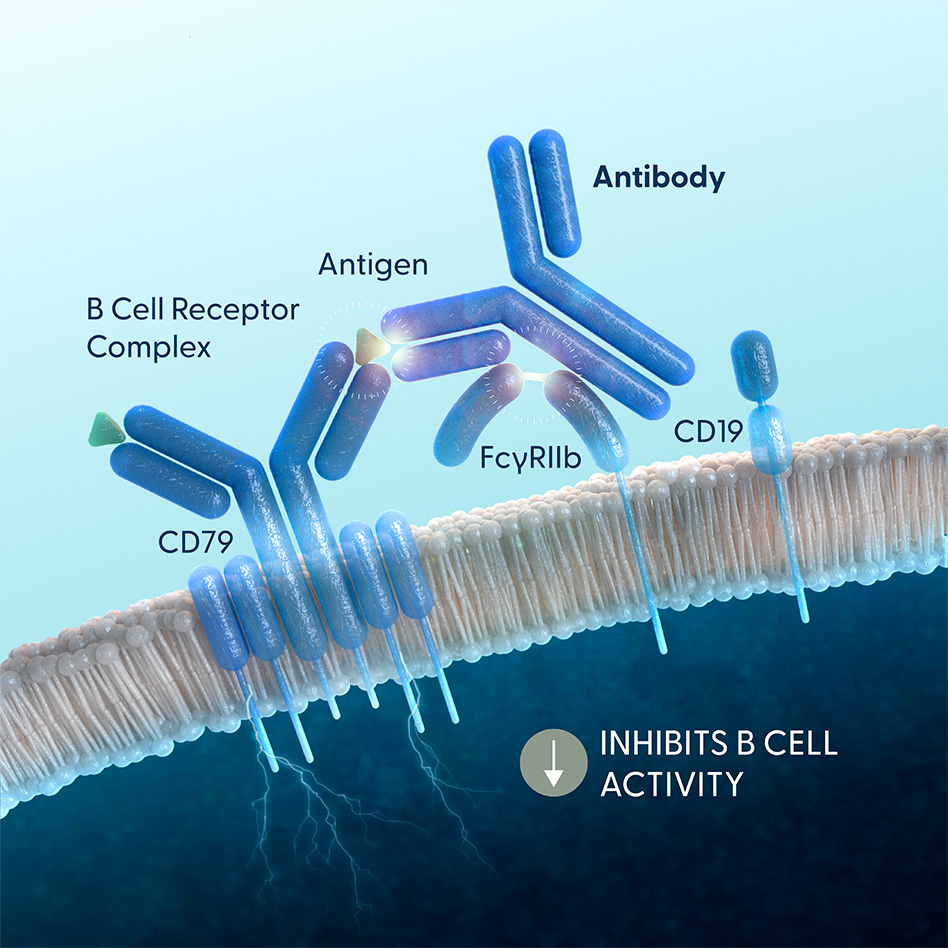
NATURAL INHIBITION
Ag + Ab Immune ComplexInhibits B Cell Activity
- Antibody Production
- Proliferation
- Cytokine Secretion
- Differentiation
- Antigen Presentation to T Cells
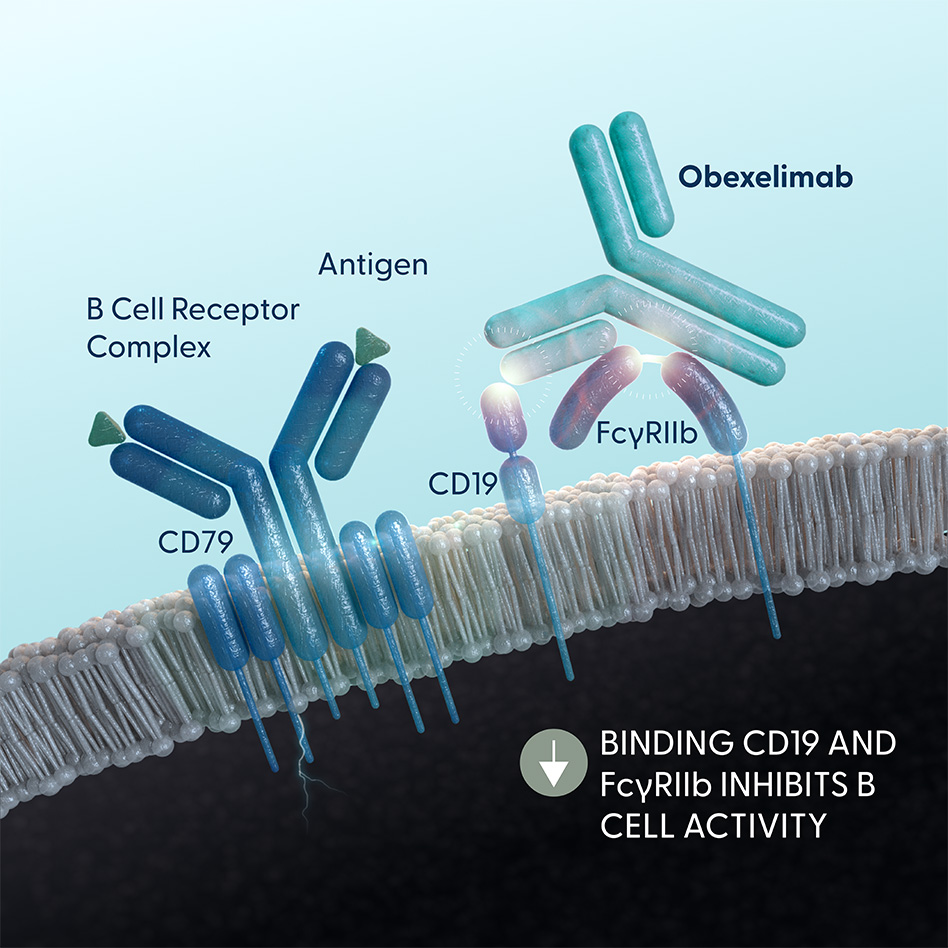
OBEXELIMAB
CD19 x FcγRIIB Bifunctional Monoclonal AntibodyBinding CD19 and FcγRIIb Inhibits B Cell Activity
- Antibody Production
- Proliferation
- Cytokine Secretion
- Differentiation
- Antigen Presentation to T Cells
Our Pipeline
We are advancing two potential autoimmune disease franchise molecules, obexelimab and orelabrutinib, along with other pipeline and partnered programs for patients with autoimmune diseases. View our pipeline.